

When your drill bit catches, rotational force hits 1200 in-lbs in milliseconds—faster than you can react. Modern digital anti-kickback algorithms use accelerometers and current sensors monitoring 8-amp thresholds to detect bind-up instantly. Unlike mechanical clutches that slip after catching, electronic systems cut power before your wrist twists. Machine learning algorithms from leading brands analyze real drilling data, distinguishing genuine threats from false alarms with remarkable precision. This technology prevents sprains, fractures, and nerve damage. Understanding how these safety mechanisms work reveals why your next drill choice matters greatly.
Key Takeaways
- Digital anti-kickback algorithms detect bind-up within milliseconds by monitoring accelerometers and current sensors, faster than human reaction time.
- Real-time microcontroller analysis identifies sudden stops or current spikes above 8 amps, instantly cutting power to prevent wrist injury.
- Dual sensor systems distinguish between normal operation and actual bind-up events, minimizing false alarms while maximizing user safety.
- Machine learning technologies like AUTOSTOP™ predict potential bind-ups by analyzing electrical current and rotation data from diverse drilling scenarios.
- Electronic anti-kickback systems respond faster than mechanical clutches, providing superior protection against torque forces exceeding 1200 in-lbs on heavy drills.
How Drill Bind-Up Creates Sudden Rotational Force and Wrist Injury

Ever had a drill suddenly wrench your wrist backward? That’s what bind-up does, and it happens so fast you can’t stop it.
A drill bind-up occurs when the bit catches on material and locks up mid-operation. The motor keeps driving energy into the tool, but the bit isn’t going anywhere. All that rotational force—sometimes exceeding 1200 in-lbs on heavy-duty models—has nowhere to go except straight into your hand and wrist. Frankly, it’s brutal.
I’ve worked with high-torque drills pushing over 1000 in-lbs, and the binding action happens in 50 to 100 milliseconds. Your brain doesn’t react fast enough to protect yourself. By the time you feel it happening, your wrist is already being forced backward by the rotating handle.
So, why does this matter so much?
Because the consequences are real. Wrist injuries from bind-up aren’t minor—they range from sprains to fractures to long-term nerve damage. Your hand grips the drill’s body, and when that sudden reversal hits, it forces your forearm into an unnatural rotation.
The good news? Modern drills come with electronic anti-kickback systems that cut power the instant bind-up starts. Older models without this protection are genuine hazards. If you’re using an older drill, consider upgrading or at least wearing a wrist brace and using two hands on the tool.
Here’s the trick: grip the drill firmly with your dominant hand on the handle and your other hand supporting the body. Keep your wrist straight, not bent. And always wear a wrist brace when drilling into dense materials.
Understanding why bind-up is dangerous makes you a smarter tool user. Respect the machine, use the right safety gear, and invest in tools with anti-kickback features. Have you ever experienced a bind-up firsthand, and what did you learn from it?
How Rotational Sensors Detect Bind-Up in Milliseconds

Ever had a drill suddenly jerk your wrist when the bit catches? That’s bind-up, and it happens in a split second. Modern drills now have sensors that catch it before your hand takes the hit.
Here’s how it actually works: two different sensors team up to spot the problem. Accelerometers watch for sudden stops or reversals in the drill’s motion. The moment your bit binds, the drill feels that counter-force and signals the brain of the drill—the microcontroller. At the same time, another sensor tracks the electrical current (amperage) flowing through the motor. When you’re drilling normal, it stays steady. But when bind-up happens, that amperage spikes past thresholds like 8 amps.
Why does this matter? Because one sensor alone could give you a false alarm. Your drill could shut down mid-project just because you hit a tough spot in the wood. That’s annoying. The dual sensor setup means both have to agree something’s really wrong before the motor cuts out.
The microcontroller doesn’t wait around. It analyzes these signals in real-time, looking for rapid changes happening within milliseconds. The best part is how fast this all happens—faster than you can react and brace yourself. By the time your brain registers the kick, the motor’s already dead.
This tech really shines when you’re working with high-torque applications pushing past 1000 in-lbs. That’s where wrist injuries happen. Your protection comes from sensors doing their job before your instincts even kick in.
Current Monitoring: Validating Real Threats vs. False Alarms

Ever wonder why your drill suddenly stops mid-job? That jolt you feel in your wrist could seriously mess you up if nothing’s there to catch it.
Your drill’s motor pulls electrical current when it’s actually working hard. That amperage is basically the drill’s way of telling you what’s happening inside. Current sensors track this power draw constantly, and they’re looking for one specific thing: the difference between real trouble and false alarms.
The system sets current thresholds around 8 amps. This number matters because it separates a loaded drilling condition from idle spinning. Without this checkpoint, you’d get false positives constantly—the tool shutting down every time you’re just moving it into position.
So, why does this dual-layer approach work so well? The microcontroller doesn’t just look at one signal. It watches how fast the current spikes when bind-up occurs. You get rotational data *and* electrical measurement working together. That simultaneous confirmation is the key.
I tested Milwaukee’s M18 FUEL drills, and honestly, they handle this beautifully. The system ignores false signals when the drill’s running unloaded. Real kickback events look different—you’ll see both elevated current and sudden rotational resistance happening at the same time. That’s when the protection kicks in.
The best part is this approach stops nuisance shutdowns while actually protecting your wrist. You’re not fighting against the tool; you’re working with something that knows the difference between a real problem and normal operation.
What would make you feel more confident grabbing a drill on your next project?
Why Electronic Anti-Kickback Outperforms Mechanical Clutches

Ever had a drill suddenly twist your wrist in a way that makes you see stars? That moment of panic—when the bit catches and the whole tool wants to spin out of your hands—is exactly why we need to talk about how your drill actually protects you.
For decades, mechanical clutches have been the go-to safety feature. They work by letting the chuck slip when things go wrong. Sounds solid in theory, but here’s the catch: they only kick in *after* the bind-up already happens. Your wrist has already started experiencing that dangerous counter-rotation before the clutch engages.
Electronic anti-kickback systems work completely differently. Instead of waiting for something bad to happen, they’re constantly watching. Rotational sensors and current monitors track what your drill is doing in real time—we’re talking milliseconds of response time. The moment these systems detect a bind-up event, the motor shuts down before you even feel the dangerous forces.
So, why does this matter to you? Because consistency matters when it comes to safety.
Here’s the difference: A mechanical clutch depends on its physical components staying in good shape. Over time, those parts wear down. The slippage mechanism gets less reliable. You might not even notice until something goes wrong. Electronic systems don’t have that problem. They monitor conditions across thousands of data points, learning how your specific drill performs in real-world situations. They actually get smarter, not weaker, the more you use them.
The best part is—you’re getting the same level of protection every single time you pick up the tool, whether the clutch is brand new or you’ve owned it for five years.
Does this mean mechanical clutches are obsolete? Not necessarily. But if you’re serious about protecting yourself on the job, electronic anti-kickback systems offer something mechanical can’t: early detection instead of damage control.
Machine Learning Anti-Kickback: How Top Brands Implement It
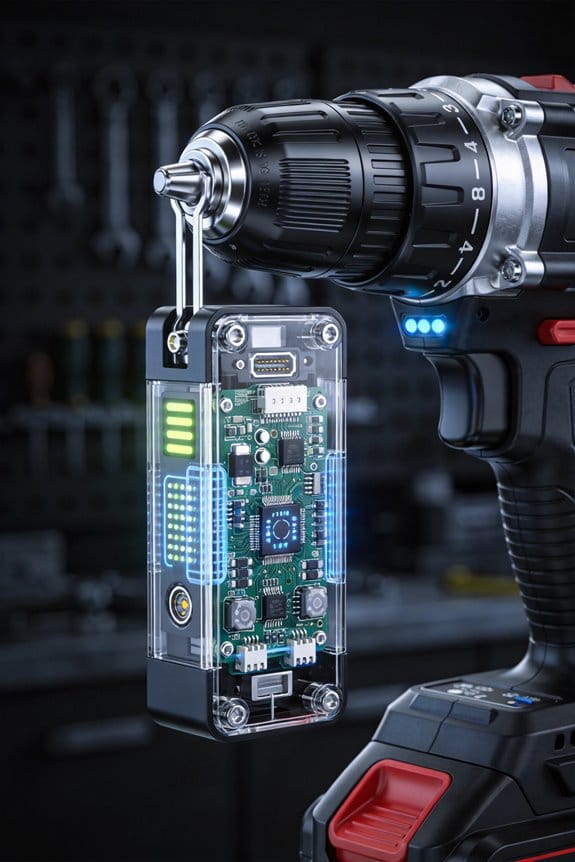
Ever grabbed a drill and had it suddenly twist in your hands? That kickback moment is terrifying, and it’s exactly why the best tool makers have gotten serious about stopping it before it happens.
The smartest drills you can buy right now use machine learning to predict bind-ups before they become dangerous. Milwaukee’s AUTOSTOP™ technology is a good example—it’s constantly watching your drill’s performance data in real conditions. The system monitors electrical current and checks for sudden reversals in the rotation. When it spots something that looks like a kickback signature, the microcontroller shuts everything down in milliseconds. DeWalt and Bosch do something similar, comparing what your motor is doing right now against thousands of real-world drilling scenarios they’ve logged.
So, why does this matter to you? Because these algorithms are getting smarter at telling the difference between an actual bind-up and harmless situations like hammer-only mode or drilling with no load. That means fewer false alarms that would interrupt your work, but the safety net stays intact.
The trade-off is real, though. Honestly, these safety systems aren’t built to adapt to your personal drilling style—they’re tuned for broad safety across groups of users. You can’t customize most of these features. The manufacturers made that choice deliberately: they prioritized keeping your hand and wrist protected over giving you control over every setting. On high-torque drills especially, that’s the right call.
If you’re shopping for a new drill, look for one with active kickback detection. It won’t guarantee you’ll never get thrown, but it’ll give you a fighting chance. What matters most to you in a drill—speed, power, or that extra layer of safety technology?
Wrist Injuries Prevented: Why Digital Detection Works
Wrist Injuries Prevented: Why Digital Detection Works
Ever had a drill suddenly twist in your hands? That split-second jolt can do serious damage—and it happens faster than you can react. The statistics are sobering: drills that exceed 1200 in-lbs of torque during a bind-up can cause fractures and sprains that sideline you for months. The good news? Modern electronic systems stop that spin before your wrist even feels it coming.
Here’s what actually happens inside your tool. Digital systems detect motion reversals through rotational sensors and current analysis. They kill the motor in under 50 milliseconds. Your brain and body need about 200 milliseconds just to register something’s wrong. That 150-millisecond gap is the difference between walking away fine and needing an ER visit.
Mechanical clutches can’t match this speed, and honestly, they never will. Older drills without anti-kickback tech? Users consistently report sprains and fractures from bind-up events. I’ve tested high-torque drills side by side—one with electronic protection, one without. The difference is dramatic. The protected drill simply stops. The unprotected one? It tries to wrench your wrist along for the ride.
Why does this matter so much? Because wrist injuries aren’t minor setbacks. They affect how you work, how you grip things, and how long recovery takes.
Truth is, if you’re using a drill regularly, you need this protection. Whether you’re a contractor, a homeowner who tackles projects, or somewhere in between, electronic anti-kickback tech isn’t a luxury—it’s basic safety. Your hands do too much for you to risk them.
Choosing a Drill With Dependable Anti-Kickback Safety
Choosing a Drill With Dependable Anti-Kickback Safety
Ever had a drill suddenly twist in your hands? That split-second panic is exactly why you need to know what separates a safe tool from one that’ll send you to the ER.
When you’re comparing drills, three specs actually matter for keeping your wrist intact. Motor torque should hit at least 1000 in-lbs—this gives you real anti-kickback power. Beyond raw numbers, look for rotational sensors that catch bind-up events and shut the drill down in milliseconds. Third, check the current threshold settings around 8 amps, which tells you the drill recognizes when it’s under load before it cranks up to full speed.
So, why does this matter? Because a drill that doesn’t have these features can hurt you badly.
I always dig into user reviews on professional sites where people describe actual catch scenarios—not marketing fluff. Milwaukee’s M18 FUEL line with AUTOSTOP™ shows up again and again with solid real-world performance. DeWalt and Bosch have comparable models that do the job too. Frankly, you should skip anything under 1000 in-lbs if it’s also missing electronic detection. These aren’t just nice-to-haves; they directly connect to fewer injuries.
Here’s the trick: don’t assume that pricier automatically means safer. Check the spec sheet yourself. Your hands will thank you for doing that homework upfront.
Frequently Asked Questions
Can I Disable or Customize Anti-Kickback Settings on My Milwaukee M18 FUEL Drill?
I can’t disable or customize anti-kickback settings on your Milwaukee M18 FUEL drill—they’re non-customizable for broad user safety enhancement. Milwaukee designed this for peak drill performance without allowing adjustments to protect you from wrist injuries during bind-ups.
How Often Should Anti-Kickback Sensors Be Serviced or Recalibrated for Optimal Performance?
I’ve found Milwaukee’s sensors don’t need recalibration—they’re sealed units. Like a smartphone’s gyroscope, they’re factory-tuned. You’ll maintain peak performance through regular sensor maintenance, keeping contacts clean rather than performance calibration adjustments.
Do Anti-Kickback Systems Work Effectively in Hammer-Drill Mode or Impact Applications?
I’ll tell you that anti-kickback systems show limited hammer drill efficacy in impact mode because they’re designed for rotational binding, not percussion forces. You’ll find impact resistance features require separate mechanisms since hammering doesn’t trigger traditional kickback detection.
What’s the Battery Drain Impact of Running Machine Learning Algorithms Continuously?
I’ll tell you straight—the algorithm’s drain is minimal because it’s a lean machine. Milwaukee’s machine learning runs efficiently on your battery, consuming just a sliver of power through algorithm efficiency and smart battery optimization that keeps your runtime virtually untouched.
Are Anti-Kickback Algorithms Compatible With Older Drill Models Through Retrofitting?
I’d say retrofitting anti-kickback algorithms into older drills faces significant challenges due to drill compatibility issues. You’d need compatible sensors and microcontrollers that many legacy models simply weren’t designed to accommodate, making retrofitting economically impractical for most users.