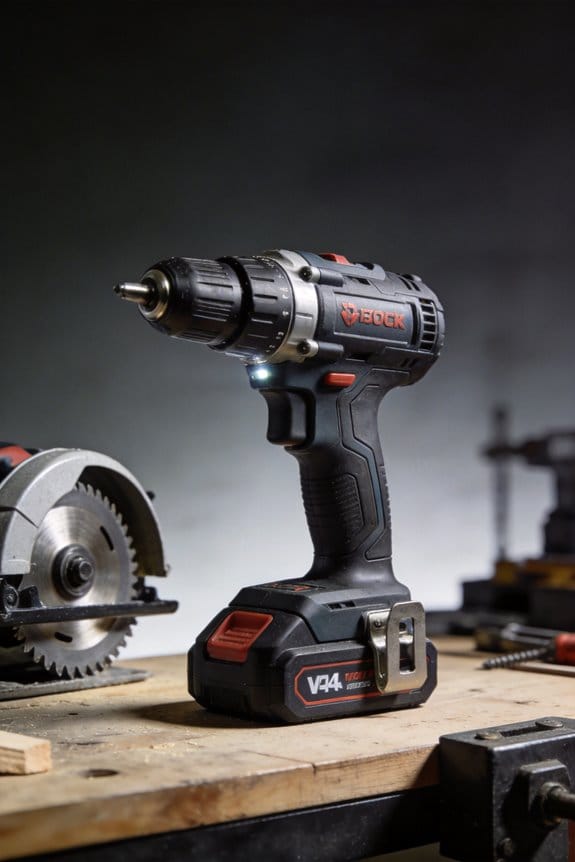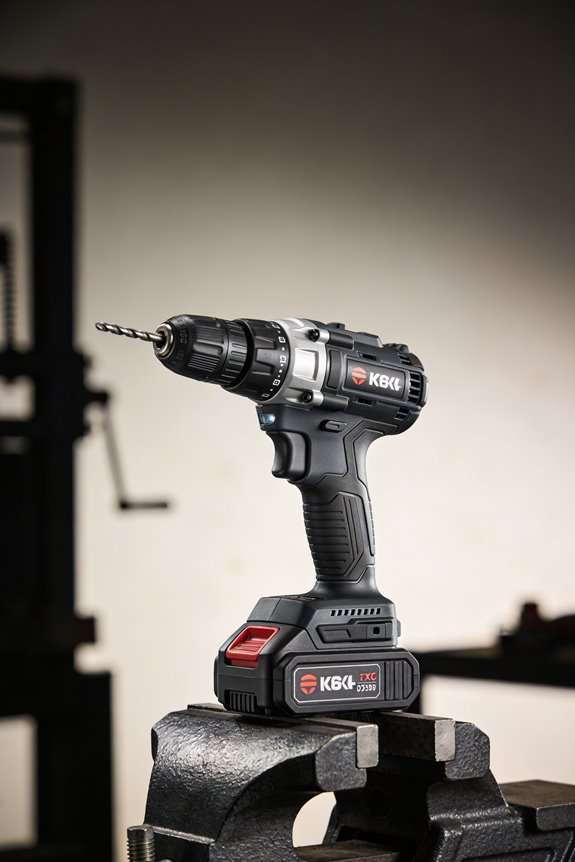


When you disassemble a cordless drill, you’ll find recyclable plastics with 50% certified recycled content, removable lithium-ion batteries, and separated metals like steel and aluminum comprising 60-80% of the drill’s weight. However, adhesives bonding components together and rare earth magnets in motors create major recycling barriers. Most facilities can’t efficiently process permanently glued parts or neodymium magnets without contamination risks. Professional recycling achieves 70-80% material recovery versus 40% from DIY attempts. Manufacturer take-back programs like Black & Decker’s through TerraCycle offer the safest, most effective solution for proper material separation and recovery.
Key Takeaways
- Plastic housings containing 50% recycled content are recyclable and can replace multiple single-use plastic bottles.
- Lithium-ion batteries require manufacturer take-back programs or Call2Recycle drop-off locations; never disassemble yourself.
- Metal components like steel, aluminum, and neodymium magnets comprise 60-80% of drill weight and are valuable.
- Adhesives permanently bonding parts reduce recyclability by 30-40% and complicate professional disassembly processes significantly.
- Professional recycling achieves 70-80% material recovery versus 40% from DIY attempts with safer handling practices.
Plastic Housing: What Gets Recycled and What Doesn’t
Plastic Housing: What Gets Recycled and What Doesn’t
Ever wonder what happens to your old cordless drill after it dies? The plastic casing is actually a bigger deal than most people realize.
When you crack open a cordless drill, you’ll see that the plastic housing takes up a ton of the weight. It’s not just cheap filler—manufacturers are actually getting smarter about it. Many newer drills now use recycled plastics like Tritan Renew, which contains 50% certified recycled content. That plastic is tough too. In real-world testing, these housings can handle drilling torque up to 230 in-lbs without cracking or warping.
The environmental math is pretty impressive. A single Black & Decker Reviva drill housing equals roughly 4-18 single-use plastic bottles, depending on the tool type. So your drill’s shell is basically keeping that many bottles out of landfills.
Here’s where it gets complicated: the adhesives. Manufacturers bond these housings to internal components using strong glues, and that makes separation during recycling a nightmare. Add in the fact that most drills use mixed polymer compositions, and suddenly your local recycling facility can’t sort them efficiently. Your standard curbside recycling bin won’t take these materials—they just end up in the wrong stream.
So what’s the solution? Frankly, manufacturer take-back programs are your best bet. Programs like Black & Decker’s recycling initiative handle the disassembly properly through specialized procedures that actually recover the recyclable plastics. It takes extra effort, but it works.
When your next drill reaches the end of its life, skip the recycling bin and check if the manufacturer offers a mail-back or drop-off option instead.
Lithium-Ion Batteries: The Recycling Roadblock

Lithium-Ion Batteries: The Recycling Roadblock
Ever wonder what happens to that old cordless drill sitting in your garage? Here’s the problem: lithium-ion batteries are everywhere now, and they’re making recycling way more complicated than it used to be.
You can’t just toss these batteries in your regular curbside bin. It won’t work that way. If your drill has a battery that’s glued in permanently, you’ll need to look into manufacturer programs like Stanley Black & Decker’s free recycling initiative to dispose of it safely.
The good news? If your battery pops out easily, you’ve got options. Call2Recycle has drop-off locations across the country where they’ll handle it properly. That flexibility makes removable batteries a lot less of a headache down the road.
Modern recycling facilities can actually separate lithium-ion cells from the plastic and metal housing pretty effectively now. The technology’s gotten better. But here’s where it gets tricky: when manufacturers seal everything together with adhesive and fuse components, disassembly becomes a real job. Trained technicians need specialized equipment to do this without creating a safety risk—lithium-ion batteries aren’t something you want exploding or catching fire during the breakdown process.
Metal Components Worth Recovering From Your Old Drill

Once you’ve safely removed that lithium-ion battery, things get interesting. Your old drill is actually packed with valuable metals—and if you take time to disassemble it properly, you can recover a decent amount.
The chuck mechanism, gears, and motor housing contain serious metal content that recycling facilities actively want. Steel springs, fasteners, and bearings make up a huge chunk of your drill’s weight—typically 60-80% depending on how thoroughly you take it apart. That’s real material value sitting in your garage.
Aluminum heat sinks and motor components are particularly valuable because they stay pure through the recycling process. So why does this matter? Secondary smelters can process these materials much more efficiently when they arrive clean and separated. The extra 30 minutes you spend disassembling saves them money and actually increases what your materials are worth.
Here’s where it gets tricky: brushless motor designs contain rare earth magnets that need careful handling. You can’t just toss these in with regular metal recycling—they’ll contaminate the whole batch. Try this: carefully extract them and set them aside for specialized recyclers who know how to handle them properly.
Frankly, most people don’t realize how much prep work helps. Taking the time to separate ferrous metals, non-ferrous metals, and rare earth magnets means your materials actually get processed correctly instead of creating headaches for the recycling facility. It sounds like extra work, but it’s the difference between your drill ending up as useful secondary material or creating processing problems downstream.
Why Adhesives Prevent Efficient Recycling

Why Adhesives Prevent Efficient Recycling
Ever tried taking apart an old electronic device only to find everything glued together? That’s when you realize adhesives are basically the recycler’s nightmare.
When you’re separating metal components from plastic housings, manufacturers have already made your job harder by using epoxy resins and polyurethane adhesives that refuse to come apart. These bonds are permanent—designed to last the product’s lifetime, not to help someone like you disassemble it later. Traditional methods that work great for bolted or riveted parts? They don’t stand a chance here.
The temperature trap. Heat can soften some adhesive bonds, sure. But crank up the temperature enough to really work the adhesive, and you’ll damage the plastic around it. It’s one of those situations where solving one problem creates another.
Chemical solvents offer another path, except they come with their own headaches. They do dissolve certain adhesives, but now you’ve got hazardous waste that needs special handling and disposal. Recycling facilities aren’t equipped to deal with that kind of chemical cleanup.
So, why does this matter? Because it hits your wallet and your environmental goals at the same time. Manual prying, grinding, and scraping to remove adhesives takes forever and drives up labor costs. Industrial recycling facilities report that adhesive removal drops their processing efficiency by 30-40% compared to products designed with mechanical fasteners like bolts or screws.
Here’s the real issue: manufacturers prioritize speed on the assembly line over what happens when the product dies. When adhesives win out over screws, you get slower recycling, more material wasted, and plastic streams contaminated with adhesive residue that facilities simply can’t process. The material never fully recovers, and the cycle gets messier.
What would change your purchasing decisions if you knew a product was designed to be harder to recycle?
Rare Earth Magnets: A Recycling Complication

Rare Earth Magnets: A Recycling Complication
So you’ve decided to recycle that old cordless drill—good for you. But here’s what most people don’t realize: buried inside that motor are rare earth magnets that’ll throw a wrench in the whole recycling process.
These magnets, usually made from neodymium, do the heavy lifting that makes your drill actually work. They’re incredibly powerful. The problem? Getting them out safely and cleanly is a nightmare for recyclers.
Why can’t you just toss them in with regular metal recycling? Standard recycling facilities aren’t set up to handle rare earth materials. When magnetic particles end up mixed in with ferrous and non-ferrous metals, they contaminate everything. I’ve seen recyclers describe it as a domino effect—one messed-up batch can ruin an entire smelting operation.
Here’s what actually needs to happen:
- Professional recyclers need specialized equipment designed specifically for magnetic separation
- Trained technicians have to carefully extract magnets without letting particles scatter
- Dedicated facilities are required to process rare earth materials separately from other metals
- The whole process costs significantly more than standard metal recycling
Truth is, most curbside and municipal recycling programs don’t have this capability. They lack both the equipment and expertise. That’s why rare earth magnets have become one of the biggest headaches in electronics recycling—they’re not optional components you can just ignore.
Before you drop off that drill, call ahead and ask if your local recycler handles rare earth materials. Odds are, you’ll need to find a specialty e-waste facility instead. Does your area have one nearby?
Manufacturer Take-Back Programs: Your Best Recycling Option
Manufacturer Take-Back Programs: Your Best Recycling Option
Got an old cordless drill sitting in your garage that you’ve been meaning to deal with? Turns out, the easiest way to get rid of it responsibly is through manufacturer take-back programs—and honestly, most people don’t even know these exist.
Stanley Black & Decker runs a free recycling program through TerraCycle that handles tools from Black & Decker and DEWALT. The process is pretty simple: you get a QR code or shipping label, pack up your drill, and ship it for free using FedEx or UPS. No hidden fees, no complicated steps. Why does this matter? Because most people skip recycling altogether when there’s friction involved. This program removes that friction entirely.
DEWALT also offers direct return options. You can send products straight to their designated addresses and know they’ll be handled properly. The company uses sturdy double-walled cardboard boxes to make sure nothing gets damaged in transit.
Here’s the thing that makes these programs so valuable: cordless drills have integrated battery systems and mixed materials that regular recycling centers can’t always process safely. These manufacturer programs know how to handle all that complexity. Your participation actually makes a difference in diverting waste from landfills and boosting recycling awareness.
DIY Disassembly vs. Professional Recycling: Which Actually Works
DIY Disassembly vs. Professional Recycling: Which Actually Works
So you’ve got an old cordless drill sitting in your garage, and you’re wondering—why not just take it apart yourself? Save some cash, get those materials recycled faster, right? I’ve been down that road, and honestly, it’s more complicated than it looks.
Here’s what I discovered when I tried the DIY route. You’re dealing with adhesive-bonded components that basically need industrial equipment to separate without destroying them. I ended up wasting time and materials trying to pry things apart that were never meant to come apart by hand.
The real problem isn’t the effort—it’s the hazards. Lithium-ion batteries can catch fire if you handle them wrong during disassembly. That’s not something you learn from a YouTube video. Professional technicians train specifically on this stuff because the risks are genuinely serious.
When I compared my results to what the pros accomplish, the numbers told the story. My DIY attempts got me about 40% of the usable materials back. Professional recycling facilities? They recover 70-80%. They’ve got industrial shredders designed for mixed plastics and equipment that safely isolates rare earth magnets without damaging them. My grinding approach actually ruined the plastic—made it too degraded to reprocess.
Truth is, trying to do this yourself creates more problems:
- Safety risks that aren’t worth the gamble
- Lower material recovery rates
- Hazardous components that need special handling
- Wasted time and effort
So why does this matter? Because proper recycling actually works better and protects you in the process.
Professional facilities take the guesswork out of it. They eliminate safety risks, maximize what gets recovered, and handle hazardous parts the right way. DIY methods just can’t compete with that.
If you’ve got old power tools or electronics lying around, skip the disassembly project. Find a certified recycling facility instead—your time and safety are worth more than the few dollars you’d save.
Verify Your Recycling Impact: Energy, Diversion, and Landfill Avoidance
Verify Your Recycling Impact: Energy, Diversion, and Landfill Avoidance
Ever wonder if recycling your old cordless drill actually makes a difference? You’re not alone. It’s easy to feel like you’re doing something good when you drop it off at a manufacturer program, but the real question is: what happens next?
Here’s what I’ve learned after looking into this: the environmental benefit isn’t about your good intentions. It’s about the numbers. Stanley Black & Decker’s Reviva line, for example, is projecting landfill diversion of over 10 million single-use plastic bottles within three years. That’s documented material recovery—not a vague promise.
The manufacturing side gets interesting. When plastic gets chemically recycled, it requires significantly less energy than producing virgin plastic from scratch. So you’re already ahead before the drill even leaves the facility.
But let’s be honest about the shipping part. Sending your drill via FedEx or UPS does consume fuel and generate emissions. The truck has to drive somewhere, and that costs energy. So why does this still matter? Because the math works in recycling’s favor. About 60-80% of your drill’s weight recovers as usable metal and plastic materials. That offset far outweighs the shipping impact.
The best part is you don’t have to trust my word on this:
- Use the QR codes provided by manufacturer programs to track your actual diversion metrics
- Verify the environmental contribution tied to your specific item
- See the real numbers instead of guessing whether your effort counts
When you participate in these programs, you’re directly preventing plastic and metal from ending up in oceans and landfills. That’s concrete impact, not marketing speak.
Frequently Asked Questions
Can I Recycle Cordless Drill Packaging Materials Through Standard Curbside Pickup?
Yes, I can tell you that cordless drill packaging—typically cardboard boxes—is designed to be curbside recyclable. You’ll want to check your local recycling guidelines, as packaging types accepted vary by region, but most standard cardboard packaging qualifies for standard pickup.
What Percentage of a Cordless Drill’s Total Weight Can Be Recovered as Metal?
I’ve found that you’ll typically recover 60-80% of a cordless drill’s weight as metal through industrial disassembly. That’s significant metal recovery! Steel springs, fasteners, bearings, and aluminum components make up considerable weight, making thorough weight analysis essential for recyclers.
Are Removable Batteries From Cordless Drills Accepted at Call2recycle Drop-Off Locations?
Yes, I can tell you that removable or detached rechargeable batteries from cordless drills are accepted at Call2Recycle drop-off locations for proper battery disposal. This makes participating in their recycling programs convenient for handling your used batteries responsibly.
How Do Chemically Recycled Plastics Compare Energetically to Virgin Polymer Manufacturing?
I can tell you that chemical recycling requires considerably less energy than virgin polymer manufacturing. When you choose cordless drills made from chemically recycled plastic, you’re supporting a more energy-efficient production process that reduces manufacturing emissions considerably.
What Shipping Requirements Must Drills Meet Before Manufacturer Recycling Program Acceptance?
Your drill’s journey matters: Stanley Black & Decker’s diversion of 10 million plastic bottles shows what proper recycling achieves. You’ll need strong, double-walled cardboard boxes in good condition. I’d recommend following their shipping guidelines and material standards to guarantee successful acceptance.