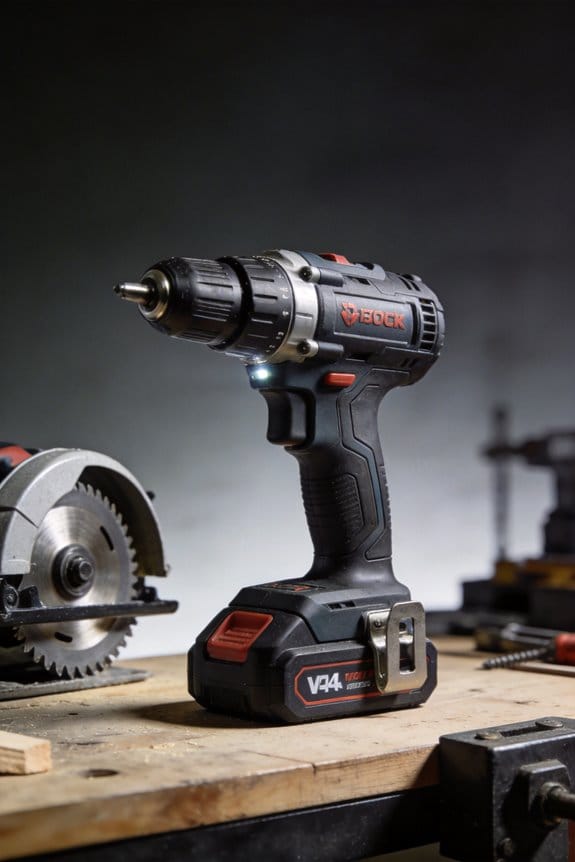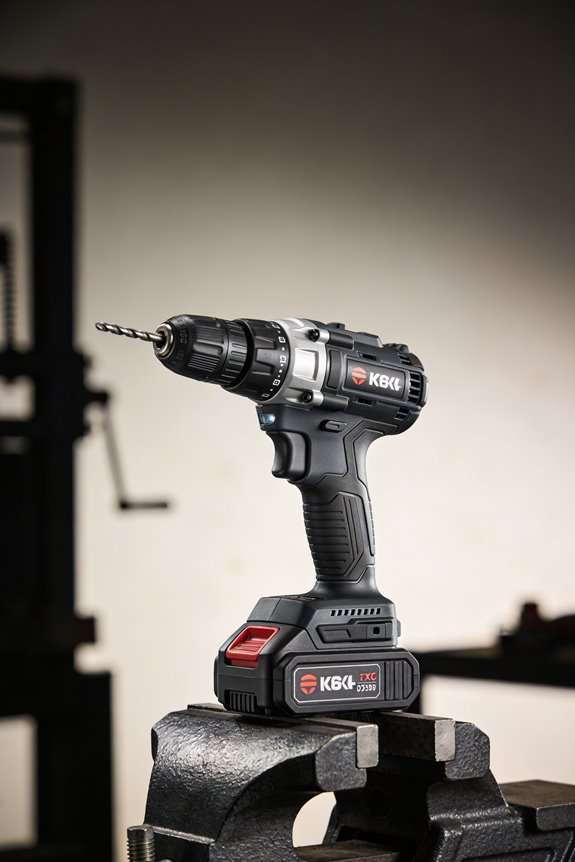


Cross-brand battery standardization will fundamentally reshape the power tool market by 2027. Right now, you’re losing 15% of job-site productivity managing incompatible battery systems across brands. Regulatory mandates from the DOE, EPA, and EU will force manufacturers to abandon proprietary designs, eliminating the profit margins they’ve protected for years. You’ll gain access to lighter tools under 3.5 pounds, faster 45-minute charge cycles, and genuine competition based on performance rather than brand lock-in. Understanding how standardization transforms manufacturing, refurbishment markets, and your operational costs reveals the full scope of this industry shift.
Key Takeaways
- Regulatory mandates like the EU Battery Regulation and DOE requirements force manufacturers to abandon proprietary systems, threatening their traditional profit model.
- Standardized battery platforms eliminate manufacturer lock-in strategies, shifting competition from brand allegiance to genuine product quality and performance metrics.
- Supply chain consolidation reduces manufacturing redundancy and inventory costs, but requires significant factory retooling and workforce retraining investments.
- Battery leasing and refurbishment markets create new revenue streams, replacing one-time sales with predictable income while reducing landfill waste.
- Non-compliant manufacturers face fines, market restrictions, and recalls, while standardization enables access to lucrative secondary markets and government contracts.
What Fragmentation Is Costing Professionals Right Now

What Fragmentation Is Costing Professionals Right Now
Ever notice how your tool collection looks like a garage sale from three different stores? That’s the real problem with mixing brands—and it’s eating into your paycheck more than you realize.
The battery situation alone is brutal. You’ve got one brand’s 18V system, another’s 36V setup, maybe a third thrown in for good measure. That means separate batteries, separate chargers, separate storage headaches. Your costs don’t just go up a little—they compound fast when you’re buying multiple power systems instead of standardizing on one platform.
On the job site, things get messier. One charger takes 30 minutes. Another needs a full hour. You’re constantly swapping equipment around, waiting for batteries, and mentally juggling which tool works with which power source. This isn’t just annoying—it directly kills your schedule.
Here’s what really hurts: professionals waste roughly 15% of their time on the job dealing with battery and charger mismatches. That’s not a small number when you’re running a crew. Think about what you could actually accomplish in that chunk of time instead.
The inventory nightmare compounds everything else. You need dedicated storage for each system, duplicate chargers sitting around unused half the time, and backup batteries scattered everywhere. So, why does this matter to your bottom line? Because every dollar you’re spending on redundant equipment is a dollar that’s not going toward actual profit.
Frankly, standardizing on one compatible system would cut through all this waste. Unified batteries, one charging routine, streamlined storage. Your workflows get simpler. Your margins improve. Your crew stops wasting half their mental energy on gear logistics.
Why Manufacturers Built Incompatible Systems (and Won’t Abandon Them)
Why Manufacturers Built Incompatible Systems (and Won’t Abandon Them)
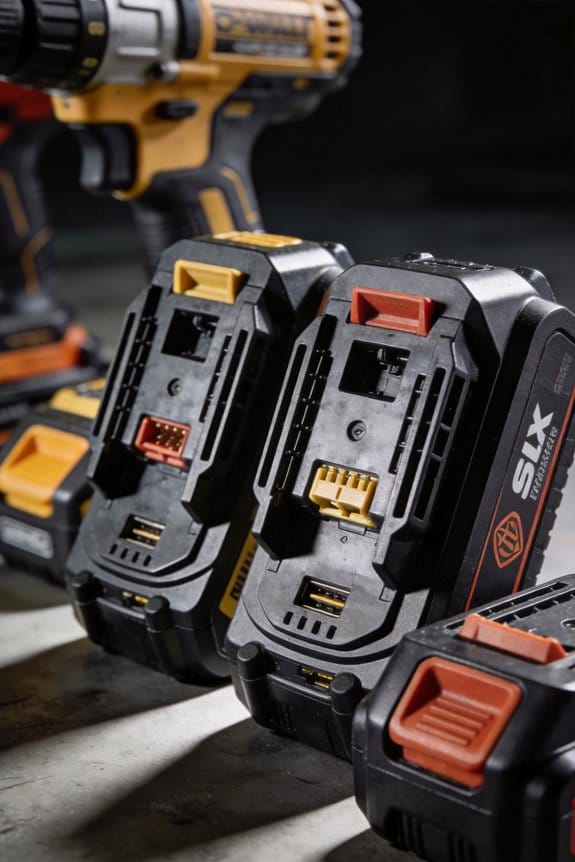
Ever notice how your DeWalt batteries won’t work with your Makita drill? That’s not an accident. Manufacturers designed these locked-down systems on purpose, and they’re doubling down instead of opening them up.
Here’s what’s actually happening: batteries are where the real money is. A drill might sell for $150, but the batteries? Those carry profit margins 40% higher than the tool itself. That’s a powerful reason to make sure you can only buy replacement batteries from one brand. If you own tools from three different manufacturers—which most professionals do—you’re stuck buying batteries from each one separately.
So, why does this matter? Because you’re funding a system that wastes your money. Companies invested billions developing their own voltage setups, firmware codes, and safety features just to keep their platforms separate from everyone else’s. They’re not going to throw that away willingly.
Frankly, the recurring revenue from batteries is too sweet to abandon. Manufacturers built their entire business model around keeping you locked in. Standardization would destroy that model completely. That’s why you see such fierce resistance from the industry, even as regulators push toward 2026 mandates requiring compatibility.
The truth is simple: these companies care more about protecting their profit streams than making your life easier. Until regulations force their hand, don’t expect change.
The Regulatory Pressure That’s Forcing Change by 2027

The Regulatory Pressure That’s Forcing Change by 2027
So you’ve probably noticed manufacturers aren’t exactly rushing to make their chargers compatible with each other. But here’s what’s actually happening behind the scenes: regulators in the US and EU have stopped waiting for voluntary action and are now setting hard deadlines that’ll reshape the entire industry by 2027.
The DOE and EPA aren’t messing around. They’re mandating compatible systems and targeting a 15% charger power reduction by 2026. Meanwhile, the EU’s Battery Regulation kicks in August 18, 2026, and requires digital passports by February 2027. These aren’t suggestions—they’re requirements with real consequences.
What does this actually mean for manufacturers? They need to redesign voltage tiers at 12V, 18V, and 36V using CAN bus protocols. The CPSC’s draft rules add another layer, demanding tamper-resistant enclosures and reverse polarity tests for lithium-ion batteries. Frankly, the compliance work is massive.
The stakes are serious:
- Non-compliance brings substantial fines
- Companies face market restrictions in major regions
- Recalls become a real possibility
Why does this matter? Because the Department of Defense already proved standardization works—they invested $44 million and demonstrated the model. Companies ignoring these mandates won’t just lose customers; they’ll get shut out of entire markets worldwide.
If you’re in the manufacturing space, waiting another year or two isn’t an option. The clock is ticking, and the companies that start adapting now will have a serious advantage over those scrambling last-minute.
How Standardization Reshapes Manufacturing and Supply Chains
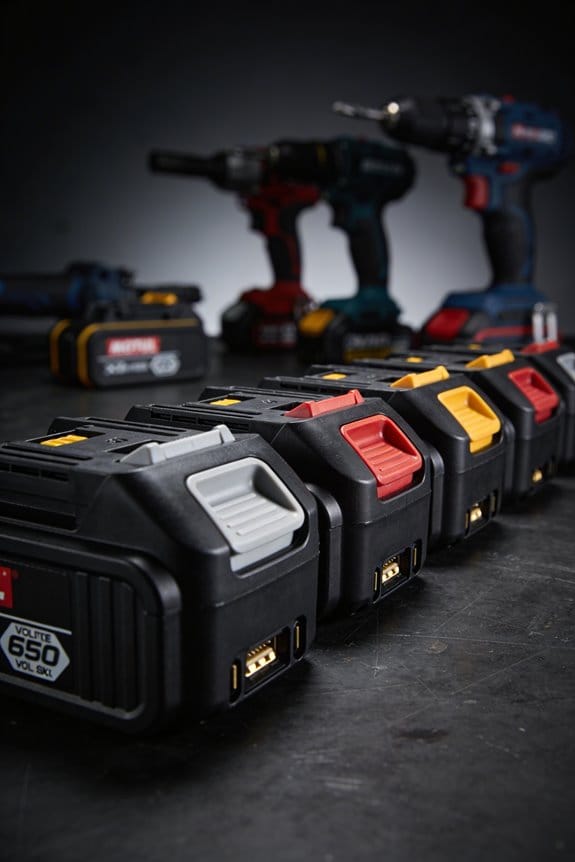
So your factory’s still running five different production lines for basically the same product, just with different logos slapped on? Yeah, that’s about to get expensive.
Regulators just dropped a deadline, and now manufacturers have to rebuild everything around standardized components. The companies I’ve talked to realize this isn’t just a minor tweak—it means rethinking your entire factory floor.
Here’s what’s actually happening: Instead of churning out custom 12V systems for Brand A and proprietary 18V setups for Brand B, you’re consolidating down to unified platforms. That sounds simple until you realize it means:
- Tearing down separate production lines
- Retraining teams on new specs
- Replacing tooling that’s been working fine
- Learning standardized CAN bus protocols
Why does this matter? Because right now, you’re bleeding money on redundant processes. Different voltage curves, custom firmware for each brand, separate quality testing—it all adds up.
Frankly, the upfront costs sting. You’ll need capital for modular production systems and new equipment. But here’s the trick: companies that bite the bullet early gain a real advantage. Standardized components mean faster assembly, simpler quality checks, and way less material waste.
Truth is, the factories that resist this change will fall behind. The ones investing in consolidated manufacturing now? They’re cutting production timelines and tooling costs at the same time.
The real question is whether you want to be forced into this later, scrambling to catch up, or get ahead of it now while you’ve still got time to plan.
The Refurbishment and Leasing Markets Standardization Unlocks

The Refurbishment and Leasing Markets Standardization Unlocks
Ever notice how your toolbox gets cluttered with batteries from different brands that don’t play well together? That’s exactly what’s happening across the construction and manufacturing world—except the stakes are way higher.
When battery makers agree on standard voltages like 18V and 36V, plus standardized communication systems (that’s the CAN bus protocol stuff), something interesting happens. Refurbished batteries stop being a sketchy gamble and become actual, reliable products you can count on. Secondary markets start popping up where reconditioned packs get tested back to original specs. Contractors don’t have to buy new systems anymore. They just rent what they need.
Here’s the financial part that matters to your wallet:
- A standardized 18V battery pack costs roughly 40% less when you lease instead of buy outright
- You send dead units to centralized repair shops that check cycle life and safety standards
- Manufacturers get predictable income streams instead of one-time sales
- Less waste gets dumped in landfills
The Department of Defense threw $44 million at this infrastructure model, which tells you something about whether it actually works at scale.
So, why does this matter to you specifically? If you’re managing equipment costs or running a contracting business, leasing standardized batteries means you’re not financing a graveyard of redundant gear collecting dust. Your capital stays in your pocket longer.
Truth is, the real win isn’t complicated—it’s just economics. When everyone speaks the same language, markets work better and prices come down.
What equipment are you currently stuck owning that you’d rather rotate through a leasing program instead?
Competing When Lock-in Strategies No Longer Work
Once manufacturers lose their grip on proprietary battery systems, everything changes. They can’t rely on forcing you to buy their branded batteries anymore, so they’ve got to actually compete on what matters.
The old days of lock-in are fading fast. Standardized 18V and 36V platforms mean you’re not stuck buying batteries from one brand just because you own their drill. That’s huge—it levels the playing field and forces companies to prove themselves through real performance, not ecosystem traps.
So, why does this shift matter to you? Because it means manufacturers now have to invest in what actually makes tools better. Instead of nickel-and-diming you with exclusive batteries, they’re competing on:
- Motor efficiency that delivers consistent power
- Ergonomics that don’t leave your wrists aching after an hour
- Durability that lasts through years of weekend projects
- Faster charge cycles—we’re talking under 45 minutes
Frankly, the winners in this new world are the companies putting real money into thermal management and brushless motor technology. Those aren’t flashy features, but they translate to tools that perform better and last longer.
The best part is that you benefit directly. Instead of choosing a brand based on battery compatibility, you can pick the tool that actually does the job better. Lighter weight under 3.5 pounds, quicker charge times, stronger torque—these are the things that separate the good tools from the mediocre ones now.
Companies adapting fastest will come out ahead by offering measurably superior performance. The ones stuck in the old playbook? They’re going to fall behind. What matters now is genuine innovation, not proprietary lock-in strategies that once guaranteed repeat sales.
Frequently Asked Questions
How Will Standardization Affect Existing Battery Inventory for Current Tool Owners?
You’ll face tough inventory management strategies as your existing batteries become obsolete. I’d recommend phased replacement approaches to minimize customer adaptation challenges, though you’ll likely need alteration support programs and trade-in incentives to ease the shift toward standardized systems.
What Timeline Exists for Manufacturers to Transition Proprietary Designs to Compliant Systems?
You’re looking at a phased timeline: manufacturers face 2026 DOE/EPA assessments, then 2027 standardization deadlines with CAN bus protocols. I’d expect changeover phases lasting 3-5 years, though compliance challenges around firmware customization and safety protocols will likely extend real-world implementation beyond initial mandates.
Which Voltage Tiers Will Take Priority if All Three Cannot Coexist Equally?
Like a pyramid standing on its foundation, I’d tell you 18V will anchor voltage tier prioritization because it’s where most professionals live. The 12V and 36V tiers follow, balancing voltage compatibility across market segments while enabling tier prioritization.
How Will CAN Bus Protocol Implementation Handle Legacy Firmware in Older Tools?
I’d say you’re looking at legacy adaptation through mandatory firmware upgrades. Manufacturers will need to implement backward-compatible CAN bus protocols in new chargers that communicate safely with older tools, or they’ll face compliance penalties under the 2027 standardization deadline.
What Penalties Specifically Apply to Non-Eu Manufacturers Selling Batteries in European Markets?
You’re facing absolutely devastating consequences if you’re not compliant. I’ll be direct: non-EU manufacturers face massive import penalties, market restrictions, and potential recalls. You’ll absorb crushing compliance costs while maneuvering through enforcement challenges that’ll reshape your entire European strategy fundamentally.