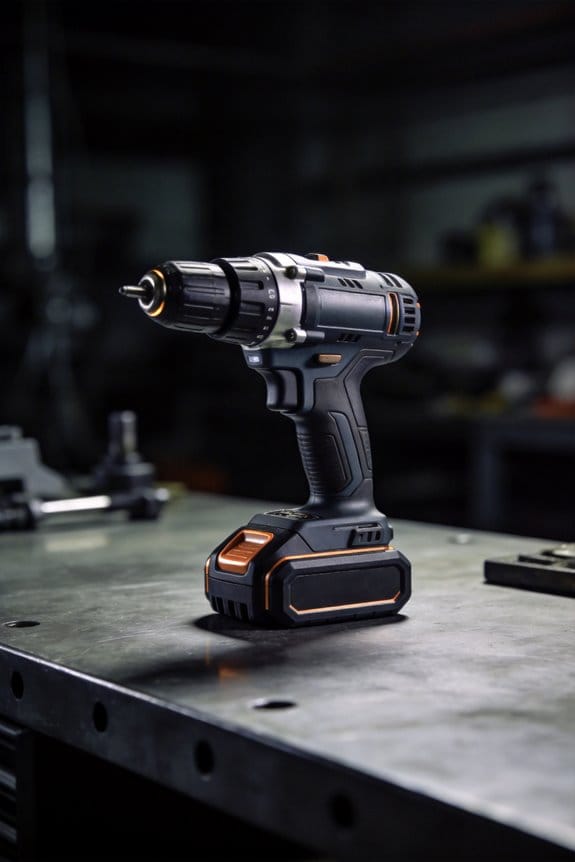
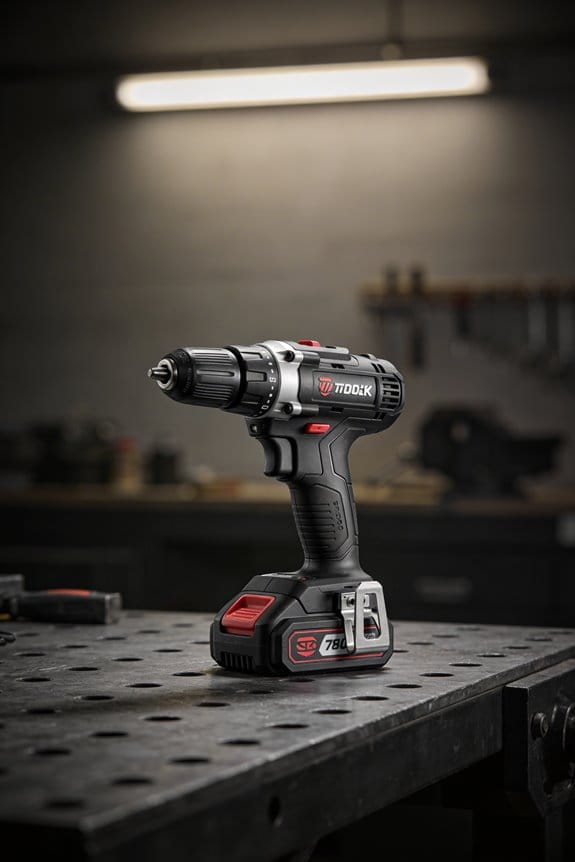

I’ve built my tool collection around DeWalt yellow and Milwaukee red. Your brain processes colors 81% faster than brand names on jobsites. Battery ecosystem compatibility locks you in after that first cordless drill purchase. Between 2008 and 2022, supply shortages shifted loyalty when preferred brands disappeared from shelves. Today’s professionals prioritize battery compatibility, dealer availability, and repair services over color alone. Red tools now come from multiple manufacturers, fragmenting what once meant automatic brand recognition. Explore further to discover how loyalty programs and dealer networks shape modern purchasing decisions.
Key Takeaways
- Color recognition shortcuts allow professionals to identify brands faster than reading names, creating strong visual loyalty associations on job sites.
- Battery ecosystem compatibility locks customers into specific brands, as switching systems involves substantial costs, reinforcing color-based brand loyalty.
- Supply chain disruptions from 2008-2022 temporarily weakened color loyalty when preferred brands were unavailable, forcing professionals to switch competitors.
- Milwaukee’s Red Rewards program and tangible incentives revitalized brand loyalty, yet market fragmentation reduced color’s exclusive significance among competing brands.
- Modern tool loyalty now prioritizes battery compatibility, dealer availability, and repair services over color recognition and aesthetic brand identification alone.
Why Professionals Refer to Brands by Color, Not Name?
Why Professionals Refer to Brands by Color, Not Name
Ever stepped onto a construction site and heard someone yell “grab the yellow one”? Yeah, that’s not lazy shorthand. That’s actually how your brain works on the job.
Professionals skip the brand names because color sticks faster. When you’re in the middle of framing a wall or running electrical, your eyes process that bright DeWalt yellow in a split second. Saying “hand me the DeWalt drill” takes longer—and frankly, it’s unnecessary when everyone on the crew knows exactly which tool you mean the moment they see the color.
Here’s why this matters: Your visual memory beats your text memory every single time. You can’t speed-read a color. You just recognize it.
The jobsite reality is simple. Speed matters. Milwaukee’s red? That’s synonymous with power tools that won’t quit on you. Makita’s teal. DeWalt’s yellow. These colors become shortcuts to reputation. After using a brand multiple times and getting solid results, that color stops being just a color—it becomes a promise. You start expecting performance the moment you spot it.
Think about it. How many times have you walked into a toolroom and instantly known which drill was which just by looking? That’s not coincidence. That’s your brain doing exactly what evolution trained it to do: process visual information faster than anything else.
So the next time you’re on a job and someone asks for the red tool instead of the Milwaukee, understand—they’re not being imprecise. They’re being efficient.
What tools are you reaching for most often?
Why Colors Stick in Your Brain (And Your Wallet)

Why Colors Stick in Your Brain (And Your Wallet)
Ever notice how you can spot your tool in a pile without thinking about it? Your brain processes colors way faster than it reads words. That yellow DeWalt drill? You’ll grab it instantly from a crowded toolbox. Same goes for the red Milwaukee impact driver—you don’t need to squint at the label.
Here’s what’s actually happening: color psychology is real, and it shapes how you shop. Studies show people remember color associations 81% better than brand names. So when your brain locks onto a color tied to a tool that’s worked for you, that matters.
Think back to a tool you’ve relied on for years—maybe a teal Makita that’s never let you down. Your brain’s been building a connection between that specific shade and the word “reliable.” That’s not nostalgia. It’s neurology at work, creating mental pathways that influence what you reach for next time.
Why does this matter? Because your wallet follows where your brain’s pattern recognition leads. You’re not sitting on the job site reading specs when you need a tool. You’re grabbing by color, trusting the association your brain’s already built.
Frankly, professionals do this all the time. I’ve watched people select tools by hue alone, without hesitation. There’s no accident in that decision—it’s your nervous system making a fast, confident choice based on past success.
The takeaway is straightforward: colors don’t just look good. They become shortcuts your brain trusts. Next time you’re shopping for tools, pay attention to which colors you reach for first. That’ll tell you something real about what your experience has taught you.
How Yellow and Red Dominated the Jobsite
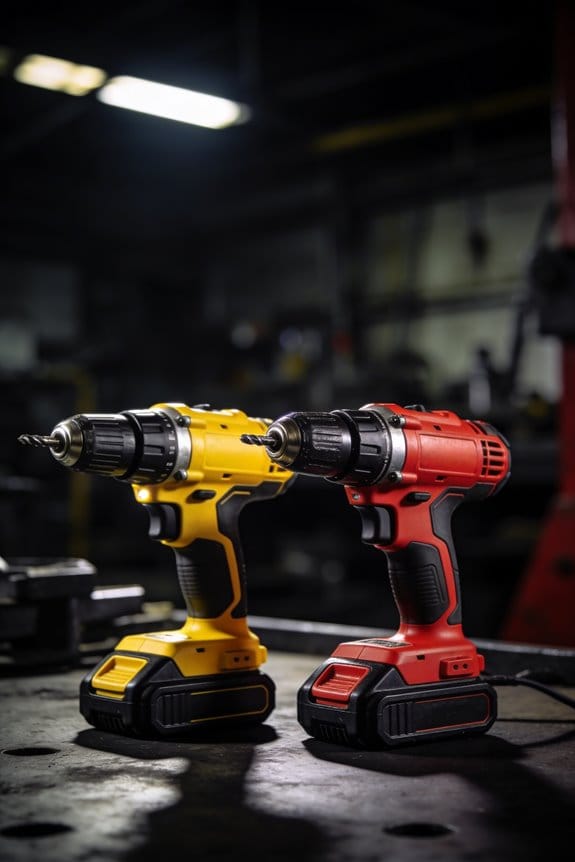
If you’ve walked around a construction site lately, you’ve probably noticed the same thing I have: yellow and red tools absolutely dominate the jobsite. But it’s not because those colors look cool or contractors woke up one day preferring them. There’s actually a practical reason behind it.
DeWalt figured out early on that if they could get professionals locked into their battery system, everything else would follow. Once a contractor invested in yellow batteries, buying another yellow tool just made sense—it worked with what they already owned. That’s not brand loyalty born from love; it’s brand loyalty born from convenience. And frankly, that’s way more powerful.
Milwaukee Tool took a different approach but landed in the same place. They built a rewards program that actually got people engaged. We’re talking 36x increases in user sign-ups and 40,000 monthly claims by 2023. People weren’t collecting points for fun—they were getting real value back, which kept them coming back for more red tools.
So, why does this matter to you? Because understanding how these color ecosystems work helps you make smarter purchasing decisions. You don’t have to follow the crowd. Just know that once you pick a battery system, you’re likely sticking with it whether you planned to or not.
The truth is, professionals aren’t really choosing colors. They’re choosing compatibility. Once that first battery purchase happens, the rest tends to follow. It’s a self-reinforcing cycle that benefits the companies selling the tools—and honestly, it can work in your favor too if you pick the right ecosystem from the start.
Battery Ecosystems: Why They Lock In Loyalty
Battery Ecosystems: Why They Lock In Loyalty
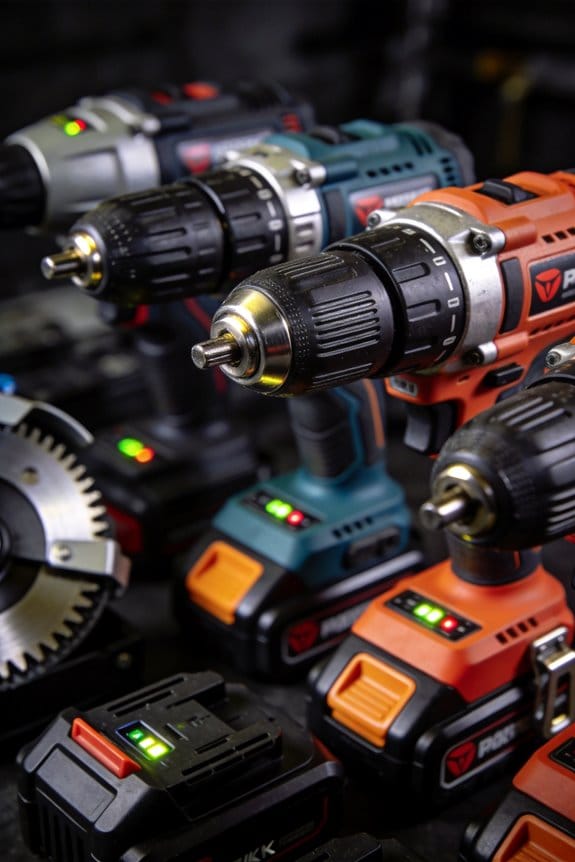
Ever notice how your first cordless drill purchase basically decides what you’ll be buying for the next five years? That’s not an accident—it’s by design.
The battery you pick first becomes the foundation for everything else. Choose DeWalt’s 20-volt system or Milwaukee’s M18 platform, and you’re locked in. Because here’s the thing: once your batteries work with a specific brand, you naturally gravitate toward buying their drills, saws, and impact drivers. It just makes sense. You’ve already got the power source figured out, so why switch?
DeWalt understood this early on. They handed out free lithium-ion batteries to jobsites, getting tools into workers’ hands without asking them to spend big upfront. Milwaukee took a different route—they built out their ecosystem with over 150 compatible tools, making it almost impossible to want anything else once you’re in the system.
So why does this matter? Because batteries aren’t really just batteries anymore. They’re the glue holding your entire tool collection together. Your first battery investment basically writes your shopping list for the next several years.
Think about it practically:
- You need a new saw → you check if your battery fits
- You want a drill upgrade → you stick with the same voltage system
- A new job requires specialty equipment → you look for your brand’s version first
The real loyalty doesn’t come from marketing or brand love. It comes from the simple fact that switching costs you money and hassle. Once you’ve invested in a battery platform, abandoning it means starting over from scratch with a different brand.
Honestly, the smartest move is to think long-term before you make that first purchase. What tools do you actually need now, and what might you need later? Pick the ecosystem that fits your real life, not just the one with the best sale that week.
When Availability Mattered More Than Color (2008–2022)

When Availability Mattered More Than Color (2008–2022)
Ever noticed how your favorite tool just vanishes from the shelf right when you need it most? That’s exactly what happened to professionals across the country during a 14-year stretch that changed everything about how they bought their equipment.
Smart design and loyalty programs are supposed to keep you coming back to the same brand. But between 2008 and 2022, something unexpected happened. Availability and money problems became way more important than color preferences or brand history.
The 2008 financial crisis hit hard. People who’d spent years—sometimes decades—buying only yellow or red equipment suddenly couldn’t afford to be picky. Your preferred brand costing 20% more? That’s a tough sell when your business is bleeding money.
Then supply chain problems made things even worse. Getting your hands on the right equipment wasn’t just about preference anymore—it was about what you could actually buy.
Here’s what really stands out: one Atlanta dealership reported that 90% of tractor sales went to non-AGCO brands simply because Fendt tractors weren’t available. Think about that for a second. Nearly 30% of large farmers admitted they’d lost their brand loyalty during a five-year stretch. So, why does this matter? Because it proves that no amount of marketing or emotional connection can compete with an empty shelf.
When your preferred option wasn’t there, you grabbed whatever was in stock. Availability stopped being a nice bonus—it became the deciding factor. That emotional bond with a specific color? It couldn’t survive an empty dealership lot.
The takeaway here is simple: tools are tools, and circumstances change everything.
What Factors Replace Color When Choosing Tools?
What Factors Replace Color When Choosing Tools?
So you’ve finally stopped picking tools based on which brand’s color looks coolest in your truck bed. Smart move. But now what? The truth is, once color takes a backseat, you’re left staring at a bunch of choices that actually matter—and it can feel overwhelming.
Here’s where most people get stuck: they don’t know what to prioritize. Performance reliability should be at the top of your list. When you’re comparing tools from different manufacturers, you need to know which ones actually hold up on the jobsite, not just in a showroom demo. Check online reviews from people who’ve used the tools in real conditions, not just marketing videos.
Price is another big one, but not in the way you might think. Frankly, the cheapest option isn’t always the worst deal. Look at what you’re actually getting for your money. Is the price transparent, or are there hidden fees buried in the fine print? You want to know exactly what you’re paying for before you swipe your card.
Parts availability matters more than you’d expect. Here’s the thing: when your drill breaks on a Wednesday afternoon, you need replacement parts *now*, not in two weeks. Check whether the manufacturer stocks parts locally or if you’re waiting for a shipment from across the country. Long-term ownership costs add up fast when you’re sitting idle waiting for repairs.
The dealer and technician network around you makes a real difference too. Does your area have quality service centers? Can the technicians actually fix equipment quickly, or do they send everything out and leave you without tools for weeks? Honest conversations with local contractors about which brands have good support in your region will save you headaches down the road.
Product improvements matter. Better battery efficiency, faster charging, tougher construction—these things add real value over time. You’re not paying extra for a fancy name; you’re paying for tools that actually last longer and work better under pressure.
Why does this all matter? Because your next tool decision should be based on what actually works in *your* situation, not what color catches your eye at the store. You’ll find that availability, real value, and hard performance data are what separate the tools you’ll still be using in five years from the ones collecting dust in your garage.
Loyalty Programs Save Color Branding
Loyalty Programs Save Color Branding****
Ever notice how you naturally gravitate toward certain brands at the store? That’s color loyalty at work. But here’s the problem: supply chain issues and economic squeeze nearly killed this powerful branding tool. Fortunately, some smart companies figured out how to bring it back.
Milwaukee Tool’s Red Rewards program is the perfect example. They didn’t just hope people would remember their red color—they gave people a real reason to stick around. The numbers speak for themselves: 36 times more registered users and 40 times more approved monthly claims compared to the year before. That’s not a small bump. That’s the kind of growth that happens when you actually solve a problem for your customers.
So, why does this matter? Because loyalty isn’t automatic anymore. You need to give professionals something tangible—cash back, faster service, exclusive perks—to keep them coming back.
The Digital Connection Makes a Real Difference
Personalized digital platforms changed everything. When professionals can log in, track their rewards, and see exactly what they’re earning, they stay engaged. It’s simple but powerful. In 2023 alone, these platforms processed over 40,000 approved submissions each month, proving that branding goes way beyond just remembering a color.
Dealers Are the Real MVPs
Here’s the trick: dealers aren’t just selling anymore—they’re becoming partners in the loyalty effort. When they actively encourage program participation, it strengthens the entire relationship between the brand and the professional. The best part is, everyone wins. Manufacturers reconnect their color identity with real value. Dealers build stronger customer relationships. Professionals get rewards and better service.
Truth is, combining digital rewards with consistent brand visibility actually works. You’re not just asking people to remember red. You’re giving them reasons to choose red, use it confidently, and recommend it to others.
What would happen if you looked at your own buying habits? Which brands have earned your loyalty, and why?
Red Isn’t Exclusive Anymore: How Shared Colors Fragment Loyalty
Red Isn’t Exclusive Anymore: How Shared Colors Fragment Loyalty
Ever opened your toolbox and realized you’ve got red tools from three different brands sitting next to each other? That’s the reality now, and it’s nothing like how things used to work.
Walk onto any jobsite today and you’ll see it immediately. Milwaukee’s still the heavyweight with their red cordless impact drivers—we’re talking 3,500 RPM and 190 foot-pounds of torque. But here’s what’s changed: SENCO and Hilti are also making red tools that perform just about the same. So why does this matter? Because red used to mean something specific. Your dad had red tools, you had red tools, end of story.
Not anymore.
The real issue is that you’re no longer picking between red and every other color out there. Instead, you’re stuck choosing between red brands that all do basically the same job. I’ve spent time testing these competing brands side by side. The performance metrics are nearly identical across the board—honestly, the differences are so small most people wouldn’t notice them on a typical project.
Here’s the trick: don’t let the color fool you into thinking loyalty matters the way it used to. What actually determines which brand makes sense for you?
- Your existing battery ecosystem (this is huge)
- Parts availability in your area
- Warranty coverage
- Access to technicians who know how to service them
Frankly, the color on the case is becoming the least important part of the decision. You’re buying into a system, not a legacy. That means if you’ve already got Milwaukee batteries and chargers at home, adding another Milwaukee tool makes logical sense. But if a friend swears by Hilti and can help you troubleshoot? That trumps brand recognition every time.
The takeaway is simple: choose based on what’s practical for your situation, not what color tradition says you should pick. What ecosystem have you already invested in?
The Future of Tool Brand Loyalty in a Multi-Color Market
The Future of Tool Brand Loyalty in a Multi-Color Market
Ever notice how you’re more likely to stick with a tool brand because of what it can *do* rather than what color it is? Yeah, that shift is huge right now.
Color used to matter way more than it does today. Back in the day, you’d recognize a brand by its signature hue from across the job site. But honestly, that’s not what keeps professionals coming back anymore. What actually matters now is whether your batteries work with your other tools, if you can get parts without jumping through hoops, and whether the manufacturer backs up what they’re selling.
The real loyalty builders in today’s market look like this:
- Battery ecosystem compatibility (can you use one battery across multiple tools?)
- Local dealer support and availability
- Quality repair services when things break
- Technicians who actually know their stuff
So, why does this matter to you? Because it means your purchasing decision shouldn’t be based on color preference alone. Instead, look at the whole system. Does the brand have a strong dealer network near you? Can you easily find replacement parts? Do their tools work together seamlessly? These are the questions that’ll actually save you money and frustration over time.
Frankly, manufacturers have figured out that they need to partner closely with dealers to build real relationships with customers. When a dealer and manufacturer work together well, you feel it—better service, faster repairs, people who actually understand your needs.
The multi-color market means brands can’t just rely on visual identity anymore. They’ve got to prove themselves through service quality and solid product performance. Battery technology, durability, and local support networks are what tip the scales these days.
Here’s the trick: before you buy, ask yourself where you’ll get parts five years from now. Can you get them? At what cost? That’s the real test of brand loyalty today—not the paint job, but the backbone behind it.
Frequently Asked Questions
How Many Brand Impressions Does a Consumer Need Before Color Recognition Becomes Automatic?
I’d argue you’re witnessing color psychology unfold like a telegraph message—you’ll need 6 to 7 brand impressions before automatic recognition kicks in. That’s when color psychology shifts your brand perception, making you reflexively reach for that familiar hue without conscious thought.
What Percentage of Purchasing Decisions Are Influenced by First-Purchase Experiences Versus Color Loyalty?
I’ve found that 93% of consumers decide on brand loyalty after their first purchase, while color preference analysis shows 81% remember brand colors over names—meaning your initial experience trumps color loyalty in determining future purchases.
Can Professionals Switch Tool Brands Without Experiencing Ecosystem Compatibility Issues With Batteries?
You’d think switching’s easy, right? It’s not. I’ve watched professionals face serious compatibility challenges during brand migration—batteries don’t interchangeably fit rival ecosystems, forcing costly reinvestment in entire cordless tool systems and chargers.
How Do Dealer Service Representatives Become Brand Champions Through Loyalty Platform Engagement?
I’ll tell you straight—dealer reps become brand champions when loyalty platforms reward their engagement through personalized interfaces and recognition programs. You’re motivated by brand advocacy strategies that measure loyalty program effectiveness through monthly claims, creating genuine partnership value beyond just color association.
Which Industries Beyond Power Tools Demonstrate Similar Color-Based Brand Loyalty Patterns?
I’ve found that automotive brands, fashion industries, tech gadgets, and cosmetics market all demonstrate color-based loyalty similar to tools. You’ll recognize Ferrari’s red, Apple’s silver, or Coca-Cola’s distinctive red instantly—proving color recognition drives purchasing decisions across industries.