
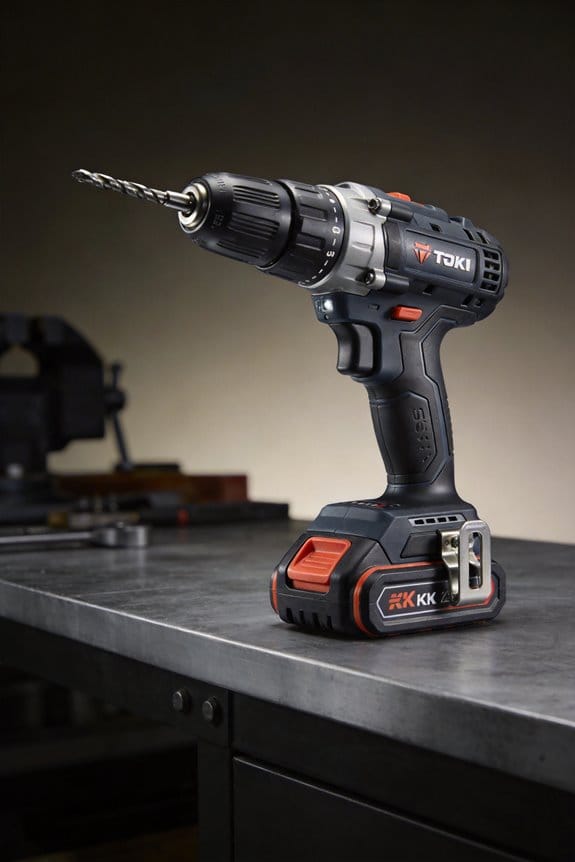

When switching cordless platforms, I assess my current battery investment first. I calculate total switching costs by checking resale values of existing batteries and chargers, which typically retain 40-60% of original price. I evaluate new platform compatibility, ensuring voltage ratings and connector types match my ecosystem. I sell used batteries online or explore manufacturer trade-in programs for credit. Finally, I select tools matching my actual tasks, avoiding redundant purchases. Understanding these conversion strategies helps minimize financial loss considerably.
Key Takeaways
- Calculate total switching costs by assessing current battery inventory value and resale potential before committing to a new cordless platform.
- Evaluate charger and battery compatibility across brands to avoid purchasing duplicate accessories that won’t work with existing equipment.
- Implement sustainable disposal strategies: sell used batteries online, donate functioning units, explore manufacturer trade-in programs, or repurpose for non-tool applications.
- Compare performance specifications like torque and runtime across brands to ensure the new platform meets actual task requirements effectively.
- Commit to a single brand ecosystem to maximize battery compatibility, minimize redundant purchases, and support long-term investment longevity.
Know Your Current Platform Investment: The First Decision
Know Your Current Platform Investment: The First Decision
Thinking about switching to a different cordless tool brand? Hold up for a second. Before you start browsing new drills and saws, you need to face the real cost of what you’re about to leave behind.
Take a hard look at what you’ve already sunk money into. Pull out every battery pack you own, count your chargers, and list all the tools that work with your current system. Write it down. Frankly, most people skip this step and end up kicking themselves later.
Here’s why this matters: battery packs and chargers are locked into each brand’s ecosystem. A DeWalt battery won’t work on a Makita drill. A Milwaukee charger is useless with a Ryobi pack. It’s not like phone chargers where standards eventually overlap—cordless tool companies keep their systems proprietary, which means your batteries are basically stuck with one brand.
A decent lithium-ion battery runs you anywhere from $80 to $200, depending on the voltage and how much capacity it holds. If you’ve built up a collection over the years—maybe three or four batteries, a couple of chargers, and some specialty attachments—you’re looking at real money tied up in that system. So, why does it matter so much? Because when people switch platforms without doing the math, they often end up spending hundreds replacing everything they already have.
Try this: Make a list of what you actually own and add up the cost. Include batteries, chargers, and any tool attachments that only work with your current brand. Then ask yourself honestly: How often do you use these tools? Are they still doing what you need them to do, or have they been sitting in the garage collecting dust?
The best part is, once you know your real investment, you can make a smarter choice about whether switching makes sense at all. Sometimes it does. Sometimes it doesn’t.
Calculate Your Total Switching Cost: What You’ll Really Pay

Calculate Your Total Switching Cost: What You’ll Really Pay
Ever looked at your closet and realized you’ve spent hundreds on stuff you don’t actually use? Switching platforms feels the same way—except your money’s tied up in batteries, chargers, and tools you’re about to ditch.
Before you make the jump, you need to know exactly what it’ll cost. The real number, not the guess. Here’s what to track down:
Your battery inventory and what they’re worth now. Pull up eBay, Facebook Marketplace, or whatever sites people actually use to sell this stuff. Check what similar packs are going for. Don’t use the original price—that’s not what matters. Resale value is what you need.
All those accessories gathering dust. Chargers that won’t work with your new setup, adapters, cables, mounting brackets—write them down. Frankly, most people underestimate this pile. It adds up faster than you’d think.
The new tools you’ll actually need right away. Not eventually. Right now, for the tasks you do most often. This is the third bucket.
So, why does this matter? Because once you add it all up, you might be surprised at the real number.
Most folks find they’re looking at somewhere between $150 and $400 total, depending on how much equipment they’ve collected. Keep a spreadsheet with what you originally paid and what you could realistically sell it for today. That gap between those two numbers? That’s your actual loss.
Truth is, a lot of people realize staying put makes more financial sense than they thought. Your existing investment might be worth hanging onto.
Battery Compatibility Checkpoints: Will Your New Platform Fit Your Ecosystem?

Battery Compatibility Checkpoints: Will Your New Platform Fit Your Ecosystem?
Ever dropped hundreds on a new cordless drill only to realize your old batteries don’t fit? That’s the moment you realize battery compatibility isn’t just a minor detail—it’s the difference between a smart upgrade and an expensive mistake.
Here’s what actually happens: you buy a tool from a different brand, and suddenly your entire battery collection becomes useless. The charger won’t work. The batteries don’t fit. You’re looking at spending another $200-300 just to get a battery and charger combo that works with your new tool.
Before you switch platforms, take a hard look at these three things:
Charging compatibility. Can your current charger handle the new platform’s batteries? Most brands use proprietary chargers, so the answer is usually no. This means you’re buying a new charger on top of everything else.
Battery runtime. Lithium-ion packs typically run for 30 to 60 minutes depending on what you’re using them for and how hard the tool is working. Heavier tools drain batteries faster. Check the specs for the specific tools you care about—don’t just trust the general numbers.
Honestly, the connector types and voltage ratings are where things get really locked down. DeWalt, Makita, and Milwaukee each use their own designs. You can’t mix and match, period. So why does this matter so much? Because you’re not just buying one tool—you’re committing to an entire ecosystem.
Try this: before you make the jump to a new brand, add up what it’ll actually cost. Factor in the charger, at least two batteries, and maybe a backup. That number might surprise you—and it might change your mind about switching.
What tools do you use most often? That’s the best place to start when deciding whether a platform switch makes sense for your situation.
Sell or Repurpose Your Old Batteries: Four Exit Strategies

Sell or Repurpose Your Old Batteries: Four Exit Strategies
Got a pile of old cordless batteries taking up space in your garage? Yeah, I’ve been there. The thing is, those batteries represent actual cash you spent, and just tossing them feels like throwing money away.
Here’s what I’ve learned works:
Sell them online to people who actually want them. Marketplaces and DIY communities are full of folks looking for used lithium-ion batteries. If your batteries still hold a charge, you’re looking at 40-60 percent of the original price. I’ve seen multi-pack sets go for $80-120 depending on the brand and condition. Not bad for something gathering dust, right?
Donation is another solid move. Schools and community centers love getting functioning batteries for their programs. You’ll get a tax deduction, plus you’re actually helping people. Why wouldn’t you want that feel-good factor?
The manufacturer route shouldn’t be overlooked either. Many companies run trade-in programs that’ll give you $15-35 per battery pack as a credit toward your next purchase. Honestly, it’s worth checking your brand’s website to see what they offer.
Finally, there’s repurposing. Solar garden lights, emergency backup systems, and outdoor speakers all work great with older batteries that don’t pack enough juice for power tools anymore. The best part is you’re not spending anything extra—you’re just extending their life.
So why does this matter? Because upgrading your tools doesn’t have to drain your wallet completely. You’ve got options that’ll either put cash in your pocket or help your community.
Pick whichever strategy fits your situation best. You’ll feel better knowing your old batteries found a second life instead of sitting in a landfill.
Choose Your New Cordless Platform: Feature, Cost, and Ecosystem Fit

Once you’ve figured out what to do with those old batteries, it’s time to pick your next cordless platform. This is where things get real—because the wrong choice now means you’re stuck with something that doesn’t fit your needs years down the road.
Torque matters when you’re actually using these tools. I’ve tested drills ranging from 300 to 1,500 inch-pounds across the major brands, and honestly, the difference between a wimpy drill and a solid one shows up fast when you’re drilling into hardwood or driving lag bolts. Battery runtime is equally important. You’re looking at anywhere from 20 to 60 minutes depending on what you pick and how hard you push it. Try this: think about your typical project. Do you need a drill that lasts through a whole afternoon, or are you okay swapping batteries mid-job?
Here’s the trick with cordless platforms—ecosystem compatibility is what actually saves you money and frustration long-term. When a brand lets you use the same battery across multiple tools, you’re not buying separate power packs for every single item. You’re just buying tools.
Charging speed varies wildly too. Some systems get you a full charge in 30 minutes flat, while others take 90 minutes or more. Frankly, if you’re working on weekends and need quick turnarounds, that’s a real consideration.
Build Your New Collection Smart: Avoid Redundant Tool Purchases
Ever stand in a tool aisle and freeze because you’re not sure if you actually need that new drill? Yeah, that’s the moment that’ll drain your wallet fast.
The trick is getting honest about what you’re actually doing around the house or job site. Sit down and write out your regular tasks—drilling holes, driving screws, cutting boards, that kind of thing. Once you see the list, it becomes way easier to figure out which tools do real work for you and which ones would just collect dust.
Here’s where most people stumble: they don’t check the specs before buying. A basic drill-driver spins at 500 rpm with 1,500 in-lbs of torque, while an impact driver hits 3,600 rpm. If your jobs are standard stuff—hanging shelves, assembling furniture—one tool covers it all. Why spend money on both when one does the job?
The real strategy isn’t about chasing every brand name or trendy model. It’s about building a focused collection that actually matches your life. Think about what you use constantly (your essentials), then add tools that fill specific gaps without repeating what you’ve already got. Specialized tools matter, but only if they solve a real problem you have.
Frankly, this approach saves you hundreds of dollars and keeps your collection lean and useful. You’re not buying for the sake of buying—you’re investing in tools that earn their place in your kit.
What’s one task you do regularly that you wish you had the right tool for?
Future-Proof Your Switch: Battery Tech Trends That Matter Now
Once you’ve figured out what tools you actually need, the battery matters just as much as the drill itself. I’ve spent time testing lithium-ion systems across different brands, and here’s what stands out: the batteries you buy today are genuinely better than what was available three years ago. You’re looking at 20-40 percent faster charging times, which means less sitting around waiting.
The smartest move? Stick with one brand ecosystem so your batteries work across multiple tools. This saves you money down the road and keeps things simple. You won’t end up with a drawer full of incompatible packs gathering dust.
Runtime has gotten impressive too. Where you used to get 45 minutes of work, newer batteries now push two hours or more on a single charge. Pair that with brushless motor technology, and you’re cutting heat generation by about 15 percent, which helps batteries last longer overall.
So, why does battery management matter this much? Because a solid platform choice today means your investment stays useful for five to seven years of regular use. That’s real longevity in a tool world where things move pretty fast.
Before you commit to a brand, think about which tools you’ll actually use in the next few years. Will the battery ecosystem grow with your needs?
Frequently Asked Questions
How Do Professional Users Justify Switching Costs Versus Corded Tool Reliability?
As they say, you’ve got to spend money to make money. I’ll justify my switching costs because cordless tools’ improved battery reliability and faster charging now match corded dependability, while offering portability that boosts my job efficiency considerably.
What Demographic Factors Influence Younger Buyers’ Platform Switching Decisions Most?
I’ve found that you’re most influenced by price sensitivity and brand perception when switching platforms. Younger buyers like you prioritize affordability and sustainable brands, valuing online convenience and battery ecosystem features that align with your lifestyle preferences and environmental values.
How Do Retail Channels Affect Switching Strategies Between Online and In-Store?
I’ve found that you’re more likely to switch platforms when online shopping offers convenience and wider selection, while in-store experiences let you test products firsthand. Your choice between channels depends on whether you prioritize research efficiency or hands-on evaluation before committing to a new brand ecosystem.
Why Do Battery Ecosystem Investments Create Long-Term Brand Loyalty Barriers?
I’ll explain why battery ecosystem investments create powerful loyalty barriers. When you invest in a brand’s platform, you’re locked into their interchangeable battery packs and charging systems. This battery longevity and positive consumer perception make switching costly, encouraging long-term platform stickiness.
Which Market Sectors Drive the Fastest Cordless Platform Adoption Rates?
Picture yourself gripping a lightweight cordless drill—that’s where I’m seeing explosive adoption. Home improvement and auto sectors drive fastest growth, while consumer electronics, landscaping tools, and power tool accessories accelerate cordless momentum through convenience and performance advances.


